
WHAT YOU NEED TO KNOW ABOUT DEMENTIA
The Facts
Dementia is not a normal part of getting old. It is a neurological condition where the brain becomes damaged over time. This impairment makes it hard for a person to remember, think, and carry out their daily life.
In Malaysia, about 1 in 10 people over the age of 60 have dementia. It often starts with small changes, but it is a progressive condition, meaning it gets worse over time as more brain cells die.
The 4 Common Types of Dementia
Dementia is not a single disease, but an umbrella term used to describe a set of symptoms caused by physical changes in the brain. It occurs when once-healthy nerve cells (neurons) stop working, lose connections with other cells, and eventually die.
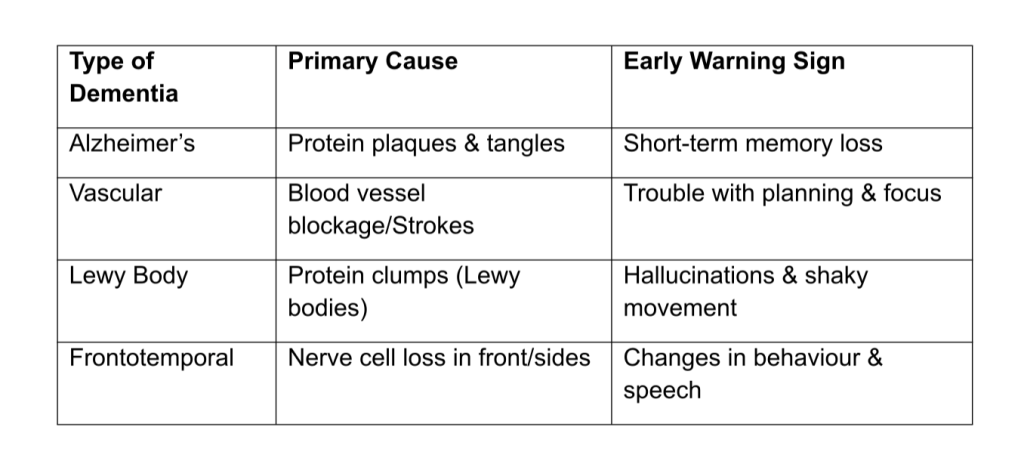
While there are many forms of dementia, here are the four most common types:
- Alzheimer’s Disease
This is the most common type making up 60% to 80% of all cases. It happens when plaques (sticky proteins) build up in the brain and block signals.
Main Sign: Forgetting things that just happened or repeating the same question many times. - Vascular Dementia
This is caused by problems with blood flow to the brain, often linked to high blood pressure, diabetes, or “mini strokes”
Main Sign: Trouble with planning, concentrating, or making decisions. In Malaysia, this is very common because of vascular risk factors. - Lewy Body Dementia
This happens when tiny protein lumps develop inside the brain cells.
Main Sign: Seeing things that aren’t there (hallucinations), acting out dreams while asleep, and having shaky hands or stiff movements. - Frontotemporal Dementia
This affects the front and sides of the brain. It is the most common type for people under age 60.
Main Sign: Changes in personality. Someone might become unusually rude, lose their manners, or struggle to find the right words when speaking.
10 SIGNS OF DEMENTIA TO LOOK FOR
If someone shows these signs, they should see a doctor at a Klinik Kesihatan or hospital:
- Memory loss: Forgetting recent events or important dates.
- Difficult to do familiar tasks: Forgetting how to use the TV remote or cook a regular meal.
- Confusion with time: Not knowing what day or month it is.
- Getting lost: Losing their way in familiar places like their own neighborhood or the local market.
- Trouble with images: Finding it hard to judge distances or tell colors apart.
- Language problems: Forgetting simple words or calling things by the wrong name.
- Losing things: Putting items in strange places (like a wallet in the fridge) and not being able to find them.
- Poor judgment: Being easily cheated by scammers or stopped bathing/cleaning themselves.
- Withdrawal: Stopping social activities, hobbies, or going to the mosque, temple, or church.
- Mood changes: Becoming very fearful, suspicious, or easily upset for no clear reason.
IS IT DEFINITELY DEMENTIA?
Sometimes, other health problems can make a person look like they have dementia.
The good news is that these can often be treated:
- Infections: A bad Urinary Tract Infection (UTI) can cause sudden confusion in seniors.
- Vitamin shortage: Not having enough Vitamin B12.
- Thyroid problems: When the thyroid gland isn’t working right.
Recommendation: Always get a proper check-up. A doctor can run simple tests to see if the problem is something that can be fixed.
KEEPING YOUR BRAIN HEALTHY (PREVENTION)
About 10% of Malaysia seniors are estimated to live with dementia (NHMS 2025).
While there is currently no certain way to prevent all forms of dementia, research shows that over 40% of cases could be delayed or prevented by targeting lifestyle factors. You can lower your risk of dementia by making healthy choices to protect your brain..
In Malaysia, protecting your brain means managing the 3 Highs: High Blood Pressure, High Sugar (Diabetes), and High Cholesterol.
- The Malaysian Brain-Healthy Plate
Use the Suku-Suku Separuh (Quarter-Quarter-Half) method, but choose these brain-boosting foods:- Fill Half your plate with Ulam and Greens: Eat things like Pegaga or spinach. They have antioxidants that protect brain cells.
- Choose Local Fish: Ikan Kembung, Siakap, and Tenggiri have Omega-3, which is like fuel for the brain.
- Switch to “Good” Carbs: Try to eat brown rice or sweet potatoes (ubi keledek) instead of white rice to keep your blood sugar steady.
- Stay Active
Physical activity keeps the blood flowing to your brain.- What to do: Brisk walking, gardening, or group exercise like Senamrobik for 30 minutes a day.
- Why: Movement helps the brain grow new connections.
- Use Your Brain
Keep your mind active. In Malaysia, we have a great advantage: speaking different languages. Switching between Malay, English, or dialects is a great brain workout.- Try this: Play games like Congkak or Sudoku, read books, or learn a new skill like sewing or computer basics.
Recommendation: If you have concern about any physical activities or health issues, always consult with your doctor.
TIPS FOR CAREGIVERS
If you are looking after someone with dementia, remember that it is a journey that requires patience.
Communication Tips
- Keep it simple: Use short sentences and ask one thing at a time.
- Stay calm: If they are confused, don’t argue or try to “correct” them. It is better to comfort them and talk about something else.
- Use their first language: If they grew up speaking a specific dialect or language, they might find it easier to understand that as their memory fades.
Home Safety
- Brighten it up: Make sure the house is well-lit, especially the path to the toilet at night.
- Clear the floor: Remove loose rugs or clutter to prevent trips and falls.
- Label things: Put pictures or words on doors (like “Tandas” or “Bilik”) to help them find their way.